Turning Sun Solar Project – Regina, Saskatchewan
Sunrise Successfully Completes Large-Scale Solar Project Import and Inland Delivery Program
In September 2026, Sunrise successfully completed the import, inland transportation, and final site delivery program for the Turning Sun Solar Project in Saskatchewan.
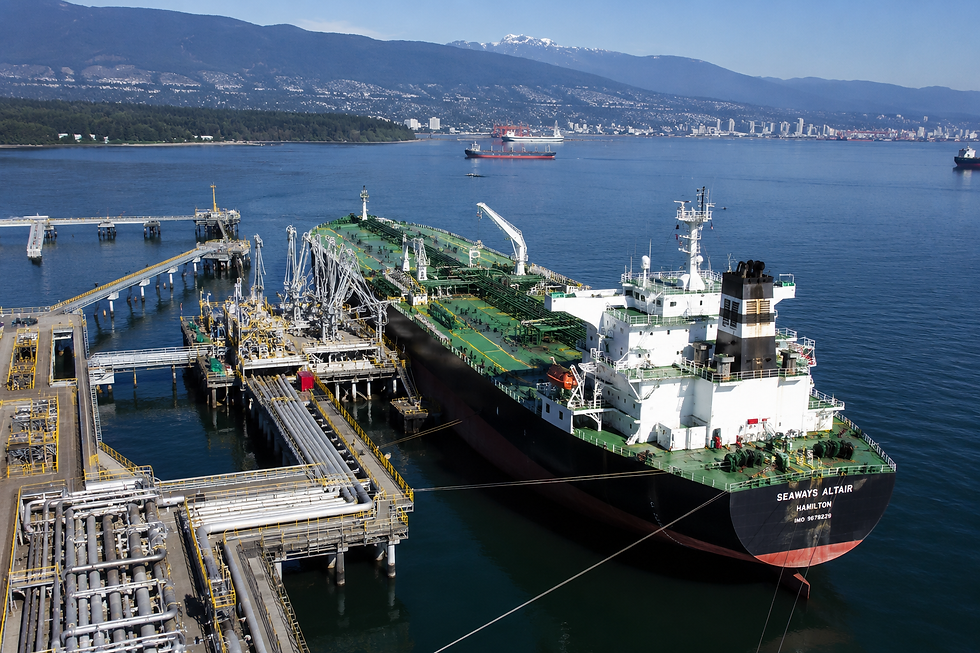
The project involved more than 300 containers. Cargo was imported through Canada’s West Coast, transferred inland by rail to Regina, and then delivered by truck to the project site near Estevan, over 200 kilometres from Regina.

From establishing the customer’s Canadian Non-Resident Importer (NRI) framework to coordinating customs, rail, trucking, site appointments, and final unloading, Sunrise provided end-to-end logistics support throughout the project.
Upon completion, the Turning Sun Solar project team provided very positive feedback.
Challenge 1: Establishing the NRI Import Framework Under a Tight Timeline
Large solar projects in Canada often use an overseas shipper or affiliated company as the Non-Resident Importer.
In this case, the customer only began the CRA and CBSA registration process in April 2026, while the first large volumes of containers were already scheduled to arrive in Canada in June 2026.
The project timeline could not wait.
The customer was outside of Canada and had no representative stationed in Canada. Sunrise therefore accepted full remote authorization and coordinated the Canadian setup process on the customer’s behalf.
The work included NRI registration and import-account setup, CRA tax registration, CBSA and CARM-related setup, customs-clearance coordination, establishment of the Canadian import process, and preparation for the upcoming large-scale logistics operation.
Despite the compressed schedule, Sunrise helped the customer complete the key NRI setup process by May 20, 2026.
Only a few weeks later, the first containers began arriving at Canadian ports, followed by rail arrivals in Regina toward the end of June.
The transition from registration to live import operations left almost no margin for delay and required close coordination among the customer, customs broker, government agencies, ocean carrier, railway, and transportation providers.
Challenge 2: Securing Sufficient Container Capacity in a Tight Inland Market
Regina is not a major container logistics hub, and local drayage capacity is relatively limited.
At the same time, other solar construction projects in Saskatchewan were already consuming a significant share of the available trucking resources.
This project required more than 300 containers to be received and delivered within a concentrated period of approximately two months.
The challenge was further increased by the location of the construction site.
The rail destination was Regina, while the final project site was near Estevan, over 200 kilometres away.
Local trucking capacity alone was not sufficient to support the required delivery volume.
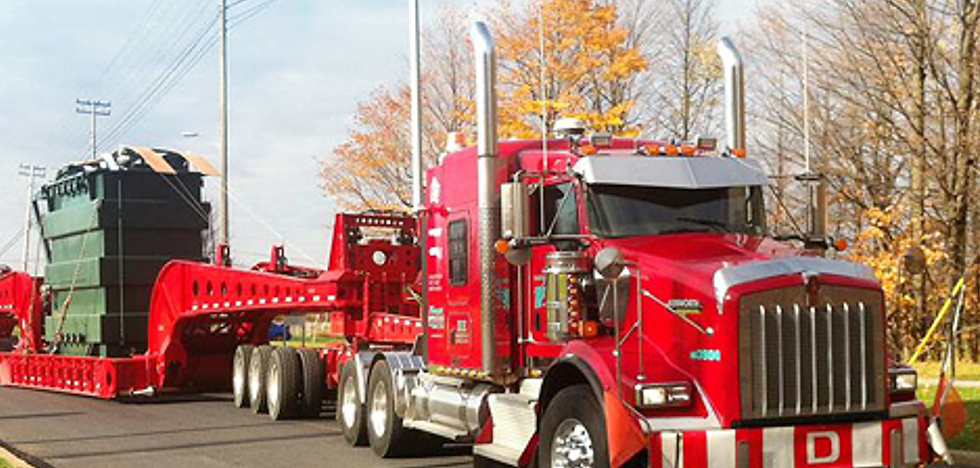
To solve the problem, Sunrise mobilized additional container trucking resources from outside the province and brought extra equipment and drivers into Regina.
This cross-regional capacity deployment provided the additional transportation resources needed during the most critical phase of the project and helped prevent congestion, excessive terminal dwell time, and project delays.
Challenge 3: Coordinating Rail Availability, Long-Haul Trucking, and Strict Site Appointments
Construction-site delivery is very different from ordinary warehouse delivery.
The project site required daily delivery plans to be submitted in advance, including container numbers, delivery quantities, appointment times, and expected arrival sequences.
At the same time, rail operations were highly dynamic.
Actual container availability depended on multiple factors, including railway transit, terminal unloading, container availability status, terminal equipment, chassis and driver availability, weather, and road conditions.
This created a fundamental operational challenge.
The construction site required a fixed delivery schedule, while the rail terminal operated under constantly changing conditions.
Sunrise’s dispatch team had to continuously bridge the gap between these two environments.
A 200-Kilometre Final-Mile Route Increased the Scheduling Complexity
The distance between Regina and the project site added another layer of difficulty.
Most containers needed to arrive in the morning or within tightly controlled appointment windows.
As a result, dispatch planning often had to begin one day in advance, and sometimes earlier.
The operational chain involved multiple interdependent steps:
Rail Availability → Container Pickup → Pre-pull → Driver Dispatch → Highway Transit → Site Appointment → Unloading → Empty Return
A delay at any one point could affect the next truck, the next appointment, or even the entire delivery schedule for the day.
During the project, the team also had to respond to railway delays, terminal equipment issues, weather disruptions, road conditions, and construction-site changes.
By closely monitoring each container and continuously adjusting the delivery plan, Sunrise maintained both high transportation efficiency and strong appointment accuracy.
Balancing Delivery Reliability With Cost Control
The project was not only time-sensitive. Cost control was also a major requirement.
Overusing pre-pull and yard storage could increase costs related to pre-pull charges, yard storage, chassis, driver waiting time, empty returns, detention, and demurrage.
However, minimizing operational buffer too aggressively could increase the risk of missed site appointments because of rail uncertainty.
The project therefore required a careful balance between transportation efficiency, delivery reliability, and cost control.
Sunrise continuously adjusted container pickup and delivery plans based on rail availability, site receiving capacity, trucking resources, and daily operating conditions.
This helped reduce unnecessary intermediate handling and control avoidable logistics costs while maintaining the required delivery performance.
Project Result

After several months of continuous execution, Sunrise successfully completed the full container delivery program for the Turning Sun Solar Project.
Key achievements included:
300+ containers imported and delivered inland
Rapid establishment of the customer’s NRI import framework
Cross-province trucking capacity deployment
Coordination among ocean, rail, terminal, trucking, and site teams
Over200 km final-mile delivery from Regina to the project site
Strict container and appointment scheduling
Continuous adjustment to rail, weather, road, and construction-site conditions
Cost control throughout the project
Successful completion of all site deliveries
Most importantly, the project was completed smoothly despite the unusually high volume and operational complexity, and the Sunrise team received strong positive feedback from project stakeholders.
We would also like to take this opportunity to extend our sincere appreciation to our valued partners — COSCO,GOLDLINE,TSN, SLINKEMO, and EDGE — for their strong support and cooperation throughout the project. Their contribution was an important part of the project’s successful completion.
Sunrise Project Logistics
The Turning Sun project demonstrated Sunrise’s ability to manage complex, large-scale project logistics in Canada.
For major construction projects, logistics is not simply about moving a container from Point A to Point B.
Successful project execution requires the integration of:
Customs Compliance + Ocean Freight + Rail + Terminal + Trucking + Site Scheduling + Cost Control
From the early stage, when the Canadian import framework had not yet been established, through to the unloading of the final container at the construction site, Sunrise supported and coordinated the entire logistics chain.
That is how Sunrise defines Project Logistics:
Not simply moving cargo, but solving the logistics challenges of the entire project.
Sunrise (Canada) Holding Co., Ltd.
International Logistics | Project Logistics | Customs Coordination | Rail & Trucking | Warehousing
Comments