Challenges and Risk Analysis in Oversized Cargo Transportation Projects in Canada — Port Selection, Inland Transportation, and Total Logistics Cost Control for Heavy-Lift Equipment
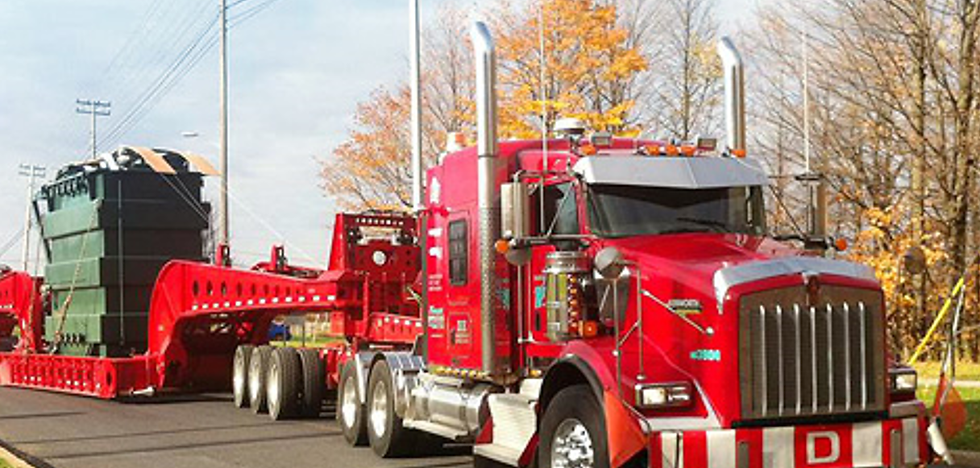
— Port Selection, Inland Transportation, and Total Logistics Cost Control for Heavy-Lift Equipment
With the continuous development of energy, mining, rail transit, chemical, and infrastructure projects in Canada, a significant amount of oversized and heavy-lift equipment must be transported from East Asia to project sites located in inland and eastern regions of Canada.
Typical cargo includes:
Mining equipment
Pressure vessels
Industrial modules
Rail transit components
Large generators and transformers
Heavy industrial machinery
These cargoes are often characterized by:
Over-dimensional size
Excessive weight
Non-breakbulk structure
Long transportation cycles
Complex handling requirements
However, Canada’s unique geographical conditions, uneven distribution of port resources, and challenging inland transportation environment create logistics complexities far beyond ordinary container shipping.
1. Project Background and Transportation Structure
In this project scenario:
Cargo mainly originates from East Asia;
Final project destinations are primarily located in:
Inland Canada;
Ontario;
Quebec;
Eastern industrial regions;
Main ocean carrier services are concentrated on Canada’s West Coast ports.
This creates a fundamental logistics contradiction:
“Ocean freight access is easiest through the West Coast, while the final destinations are thousands of kilometers away in inland or Eastern Canada.”
As a result, the project faces multiple transportation, operational, and cost-control challenges.
2. Key Challenges of Using West Coast Ports
2.1 Port De-Stuffing Risks for Flat Rack Cargo
Oversized cargo is commonly shipped using:
Flat Rack Containers
Open Top Containers
However, many Canadian West Coast terminals do not allow:
Long-term occupation of terminal space by oversized cargo;
Direct pickup of loaded flat rack containers;
Immediate transfer onto standard trucking equipment.
Therefore, cargo often requires:
Port de-stuffing;
Crane lifting operations;
Reloading onto specialized heavy-haul trailers.
This generates substantial additional costs, including:
Major Cost Components
Heavy crane charges;
Port labor fees;
Specialized lifting operations;
Terminal storage fees;
Demurrage and detention;
Oversized cargo handling surcharges;
Safety supervision and terminal coordination costs.
One of the most dangerous issues in oversized cargo logistics is:
“Failure to confirm de-stuffing requirements before quotation.”
In many cases, carriers or terminals do not clearly confirm operational restrictions during the booking stage. Only after cargo arrival does it become apparent that:
The flat rack cannot leave the terminal intact;
Port de-stuffing becomes mandatory;
Cargo must be transferred to specialized trailers within the port area.
At that point, logistics providers may already be contractually committed and unable to recover the additional costs.
For large-scale industrial projects:
Unexpected extra costs can easily reach tens or even hundreds of thousands of Canadian dollars;
If the logistics contract is fixed-price;
The service provider may be forced to absorb the losses.

Therefore:
Pre-shipment confirmation of terminal handling procedures is absolutely critical.
The following must be verified before quotation:
Whether direct flat rack pickup is permitted;
Whether oversized cargo can remain on terminal;
Whether specialized trailers can enter terminal areas;
Whether mandatory port de-stuffing applies.
At the same time, the following charges must be pre-confirmed:
De-stuffing fees;
Crane operation charges;
Oversized handling surcharges;
Potential storage and congestion risks.
Failure to verify these items in advance may lead to severe financial exposure for the project.
3. Inland Transportation Challenges from the West Coast
Even after successful arrival at West Coast ports, oversized cargo still faces major inland transportation difficulties across Canada.
3.1 Rocky Mountain Transportation Constraints
Cargo moving from ports such as Vancouver toward Central or Eastern Canada typically must cross the:
Rocky Mountains
For standard containers, this is mainly a distance issue.
For oversized and overweight cargo, however, it introduces far more complex operational risks.
Key Challenges Include:
Steep mountain grades;
Tight turning radii;
Bridge weight limitations;
Tunnel clearance restrictions;
Winter snow and ice conditions;
Limited hauling power for specialized trailers.
In some cases, transportation may require:
Multi-axle hydraulic trailers;
Push trucks;
Temporary traffic control;
Night transportation;
Police escorts.
As a result, inland transportation costs in Canada for heavy-lift cargo can become extremely high compared to conventional freight.
3.2 Spring Weight Restrictions
Many Canadian provinces impose:
Spring Weight Restrictions
during seasonal thaw periods.
The reason is that:
Frozen ground begins to soften;
Road structures temporarily lose load-bearing capacity;
Heavy vehicles can seriously damage road surfaces.
This has major implications for oversized transportation.
Potential impacts include:
Previously approved routes becoming unusable;
Forced rerouting;
Transportation delays;
Re-application for permits;
Suspension of heavy-haul movements.
For engineering projects:
A poorly planned transportation window may delay the entire project by weeks or even months.
Therefore, oversized logistics in Canada is not merely a transportation issue — it is also:
A climate management issue;
A regulatory coordination issue;
A project scheduling issue.
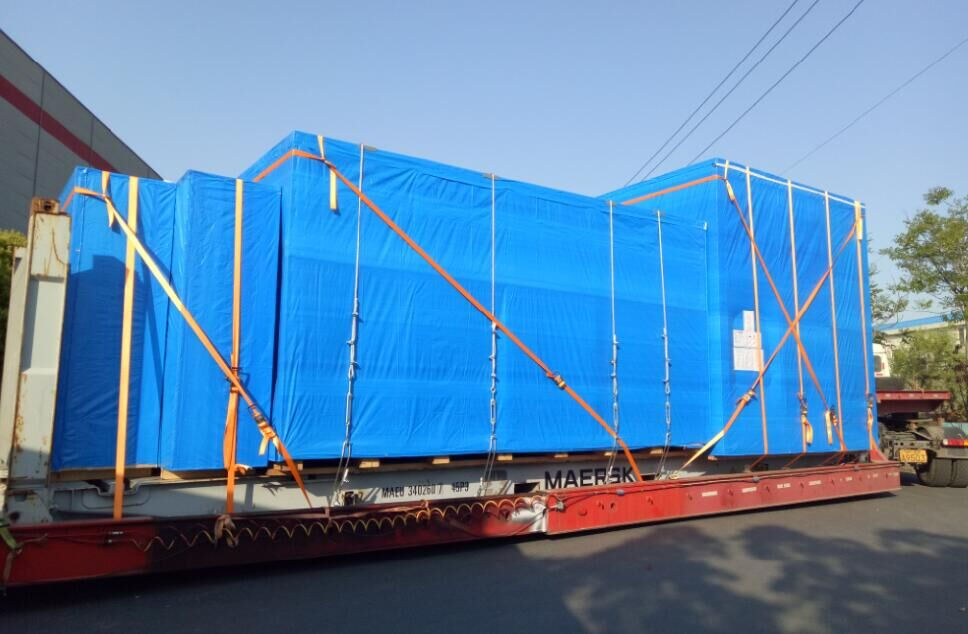
4. Challenges of Using East Coast Ports
In theory, routing cargo directly to Eastern Canada would significantly reduce inland trucking distances.
However, this option introduces a different set of operational difficulties.
4.1 Extremely Limited Carrier Services
Heavy-lift and breakbulk services from East Asia to Canada’s East Coast are extremely limited.
Many carriers:
Do not offer fixed services;
Operate irregular schedules;
Provide inconsistent routing options.
In many cases, cargo must:
Transit through Europe;
Or transfer via U.S. East Coast ports.
4.2 High Risks Associated with European Transshipment
Oversized equipment is highly sensitive to:
Multiple lifting operations;
Multi-port transshipment handling.
European transshipment significantly increases operational risk.
Major Risks Include:
Secondary lifting damage;
Long terminal waiting times;
Missed vessel connections;
Extended outdoor storage exposure;
Weather-related corrosion;
Port labor disruptions;
Failed oversized cargo transfers.
At the same time:
Transit schedules become far less predictable.
For example:
An originally planned 60-day transit;
May realistically extend to 90–120 days.
For industrial projects, oversized cargo often represents:
Critical Path Cargo
Any delay can directly impact:
Installation schedules;
Construction progress;
Contractor mobilization;
Project commissioning.
At this stage, logistics risk quickly escalates into overall project risk.
5. The Dilemma of Breakbulk Vessel Solutions
For large-volume oversized projects, chartering breakbulk vessels is often considered the ideal solution.
Advantages include:
No flat rack limitations;
Direct lifting operations;
Reduced terminal de-stuffing risks;
Better suitability for ultra-heavy cargo.
However, practical challenges remain.
5.1 Insufficient Cargo Volume Creates High Costs
Charter vessel costs typically include:
Daily vessel charter rates;
Port charges;
Crane expenses;
Demurrage;
Fuel costs.
If project cargo volume is insufficient:
The per-unit transportation cost becomes extremely high.
This creates a common dilemma:
“Cargo volume is too small for economical chartering, yet containerized solutions carry high operational risks.”
5.2 Unstable Sailing Schedules
Unlike liner services, breakbulk vessels are usually:
Market-driven;
Non-fixed schedule operations.
As a result:
Sailing dates may change;
Intermediate port calls may vary;
Arrival times become less predictable.
For engineering projects, logistics schedules must align closely with:
Civil construction progress;
Installation windows;
Crane mobilization schedules.
Uncertainty in breakbulk schedules significantly increases overall project management complexity.
6. The Core Logic of Oversized Project Logistics
This case demonstrates that oversized cargo transportation is far beyond conventional freight forwarding.
Its true nature is:
A comprehensive systems engineering challenge involving:
Port resources;
Ocean carrier availability;
Inland heavy-haul transportation;
Government permits;
Seasonal road restrictions;
Climate conditions.
Ultimately, project success is not determined solely by ocean freight pricing, but by:
The ability to design an integrated and controllable logistics solution from the beginning.
7. Key Risk Control Recommendations
7.1 Confirm Terminal Handling Requirements Before Quotation
Critical confirmations include:
Whether flat rack direct pickup is allowed;
Whether de-stuffing is mandatory;
Terminal crane handling charges;
Access conditions for specialized trailers.
7.2 Conduct Detailed Route Surveys
Route studies should evaluate:
Bridge load capacity;
Turning radius limitations;
Overhead utility clearance;
Mountain grade restrictions;
Seasonal road conditions.
7.3 Avoid Spring Weight Restriction Periods
Transportation schedules must carefully consider:
Seasonal thaw timing;
Provincial restriction periods;
Permit validity windows.
7.4 Select Transportation Mode Based on Cargo Volume
Small-volume projects:
Flat rack solutions may remain more economical;
But operational risks must be tightly controlled.
Large-volume projects:
Breakbulk vessel solutions may reduce overall unit costs;
And improve operational flexibility.
7.5 Conduct Dedicated Transshipment Risk Assessments
Particularly for European transshipment scenarios, special attention must be paid to:
Terminal heavy-lift capability;
Transshipment dwell times;
Secondary lifting risks;
Cargo insurance coverage.
8. Conclusion
The true complexity of oversized cargo logistics in Canada lies not only in the size of the cargo itself.
Rather, it is the combination of:
Canada’s geographical structure;
Port resource concentration;
Mountain transportation constraints;
Seasonal road regulations;
Long inland transport distances;

that creates an exceptionally challenging logistics environment.
In such projects, the best logistics solution is rarely the one with:
“The lowest ocean freight rate.”
Instead, successful project execution depends on:
“The solution with the lowest overall risk, highest schedule reliability, and strongest control over hidden operational costs.”
Kevin from Sunrise(Canada) | 2026-05-01
Comments